

The Engine vs. The Infrastructure
Why Muscle Alone Won't Save You

The “longevity stack” isn’t mysterious. It is just demanding. Here is the data everyone ignores because it isn’t sexy.
In the regenerative medicine world, we talk a lot about muscle. I often call it the “organ of longevity.” It is your metabolic armor and your structural defense against frailty.
But if muscle is the infrastructure, then cardiorespiratory fitness (CRF) is the engine.
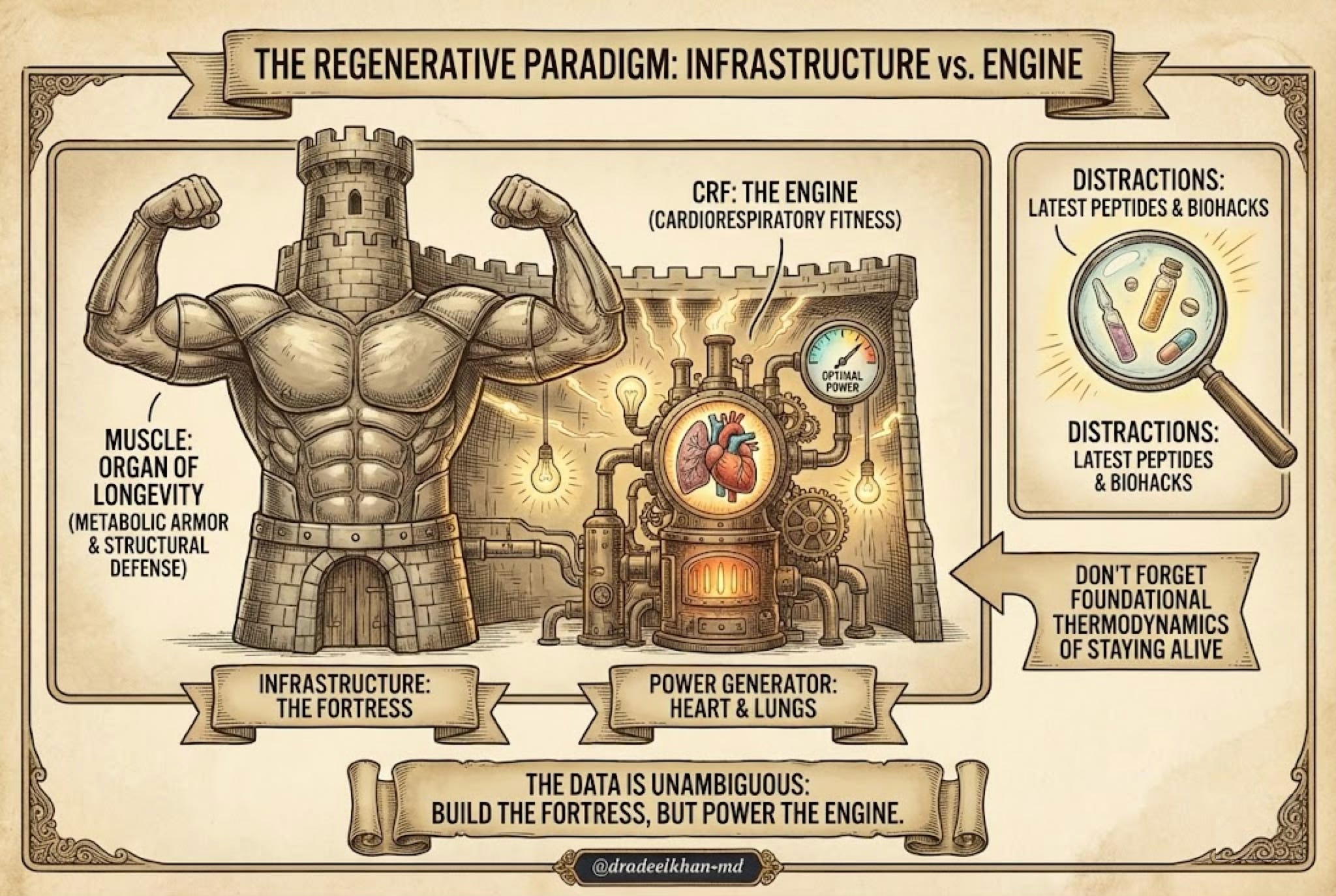
You can build a fortress with thick walls (muscle), but if the power generator inside (your heart and lungs) fails, the lights still go out.
We often get distracted by the latest peptide or biohack, forgetting the foundational thermodynamics of staying alive. The data is not ambiguous on this.
The 20 Million Person Proof
If you doubt the importance of your engine, look at the numbers.
A massive 2024 overview of meta-analyses published in the British Journal of Sports Medicine looked at approximately 20.9 million observations across 199 cohort studies.
The conclusion was devastatingly simple: Cardiorespiratory fitness is a strong, consistent, and independent predictor of morbidity and mortality.
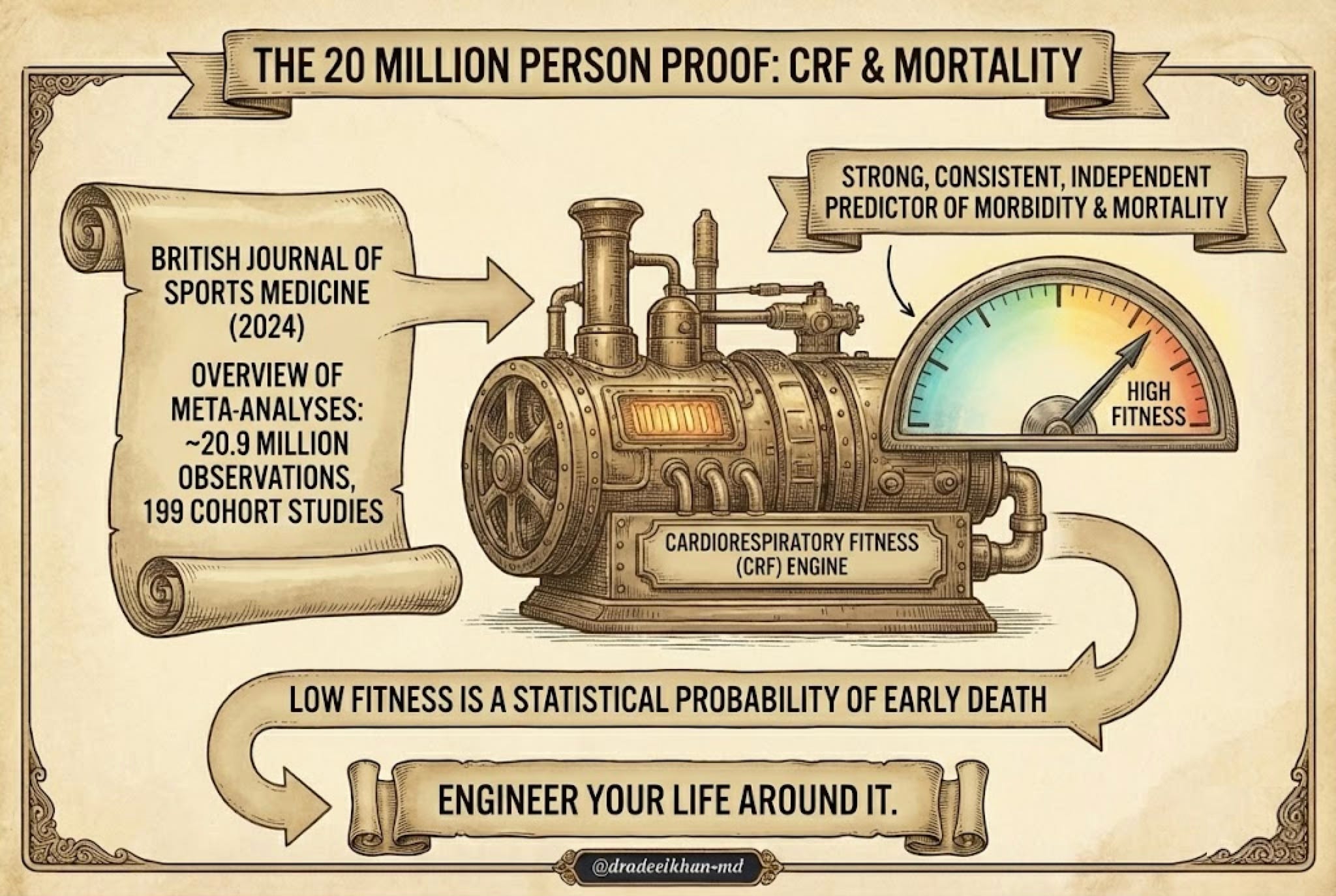
When you have a dataset of 20 million people pointing in one direction, you don’t argue with it. You engineer your life around it. Low fitness isn’t just a “weakness”; it is a statistical probability of early death.
For a breakdown of why this specific metric—VO₂ max—outperforms almost every other biomarker for predicting lifespan, watch this explanation by Dr. Peter Attia:
Why VO2 max is the greatest predictor of lifespan | Peter Attia
The “Boring” Longevity Stack
The problem with real longevity medicine is that it isn’t sexy. It doesn’t sell as well as a “magic pill” because it requires work.
The modern longevity stack isn’t mysterious. It is just demanding.
Here are the five non-negotiable inputs for the human operating system:
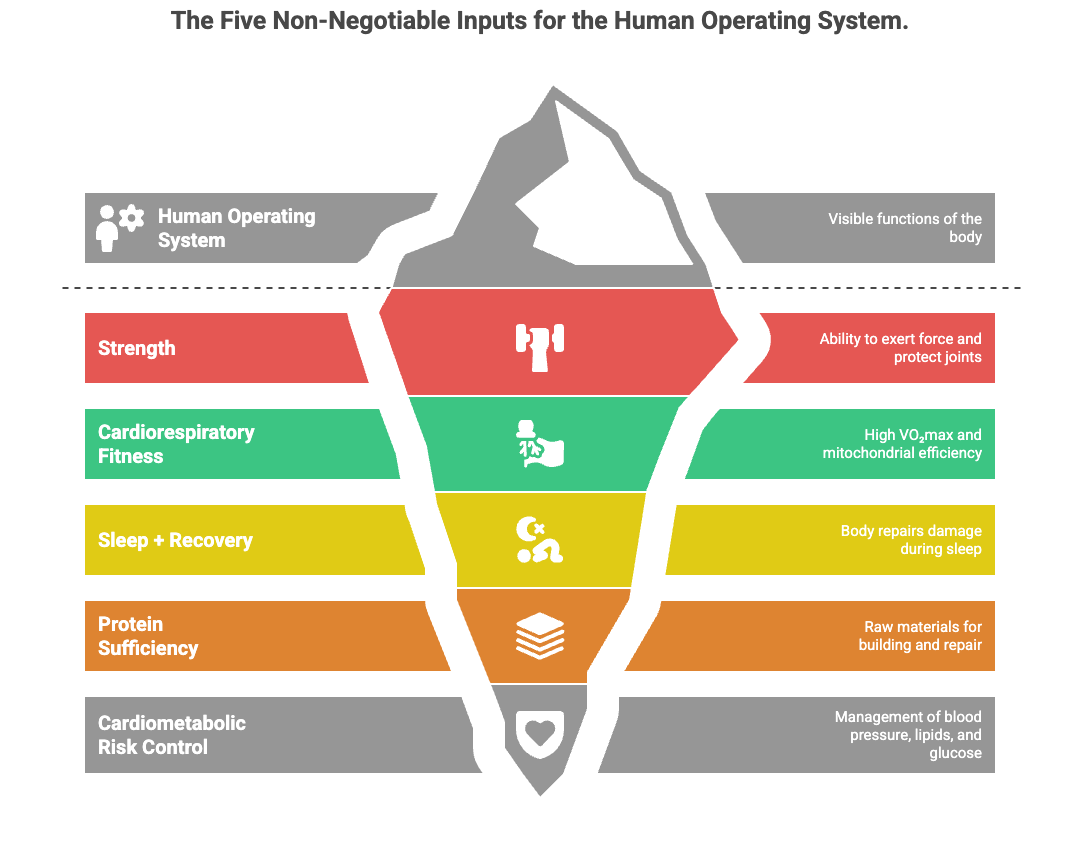
Strength (The Infrastructure): The ability to exert force and protect joints.
Cardiorespiratory Fitness (The Engine): High VO₂max and mitochondrial efficiency.
Sleep + Recovery (The Maintenance): The only time your body repairs the damage you do during the day.
Protein Sufficiency (The Raw Materials): You cannot build a house without bricks. 1.6g to 2.2g per kg of body weight.
Cardiometabolic Risk Control (The Dashboard): Aggressive management of Blood Pressure, ApoB/Lipids, and Glucose/Insulin patterns.
This video featuring Simon Hill breaks down the nuanced interplay between strength and cardio, and why you cannot optimize for longevity by choosing just one:
Strength Training vs. Cardio: What Adds More Years to Your Life? | Doug Bopst
The Takeaway
We live in an era of “hacks,” but you cannot hack a weak engine.
Regenerative medicine—stem cells, gene therapy, Follistatin—works best when applied to a system that is already optimized. These tools are multipliers. If your base fitness is zero, you are multiplying by zero.
This stack is not flashy. It is not a secret kept by billionaires. But it is devastatingly effective.
Stop looking for the shortcut. Build the engine.
For a deeper look at how we layer advanced regenerative therapies on top of this foundation, check out my discussion on the future of stem cells and peptides:
Dr. Adeel Khan: Regenerative Medicine, Stem Cells & Longevity | Eterna Health Dubai